Our manifesto
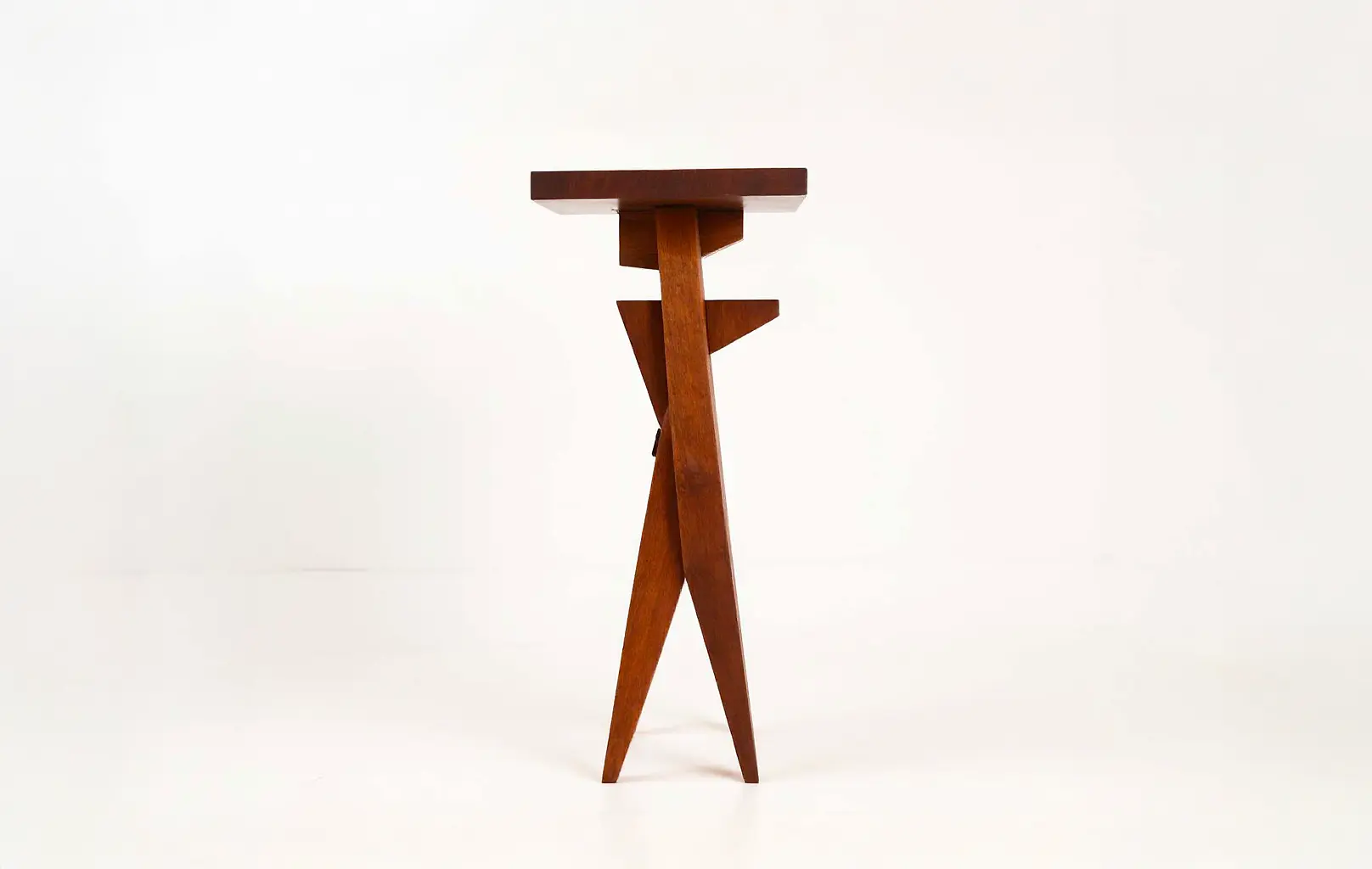
Between algorithm, gesture and matter, the dialectic of the real
Our conceptual exploration is rooted in a heritage both rigorous and iconoclastic, in dialogue direct with the great tradition of decorative arts. Like the Art Nouveau and Art Deco movements before us, which embraced the technological innovations of their time while maintaining craftsmanship excellence, we explore the boundaries between system and chance, between geometric precision and calculated disorder. Following artist-engineers who pioneered generative art, our furniture design transcends mere object production to become an ongoing dialogue between algorithm and hand.
We reinterpret the avant-garde vision that transformed technology into a creative tool, while nurturing an insatiable curiosity for elementary forms and their expressive potential. In this dialogue, the artisan's gesture occupies a central position - precise, expert, carrying a bodily memory that no machine could reproduce. This gesture transforms mathematical formulas into tangible reality, infusing materials with dimensions algorithms alone cannot achieve.
As authors, we claim the materialization of ephemeral algorithmic moments - each work becoming the physical, enduring translation of a fleeting, unique representation generated by our systems. This crystallization in solid matter freezes the algorithmic snapshot, transforming the immaterial into a sensory object bearing the imprint of both the code that conceived it and the hand that shaped it. Our unwavering commitment to noble materials acknowledges that they carry their own history and singularity that our algorithmic approach seeks to reveal rather than dominate.
I. Fundamental principles
a. The Imaginary Machine as Method
Following Vera Molnár's (1924-2023) "imaginary machine," we adopt a systematic methodology that precedes and guides execution. Each work emerges from precise rules and self-imposed constraints, transforming creation into rigorous exploration rather than spontaneous expression. Our approach is inspired not only by Molnár's "imaginary machine," but also explores what we call the "artificial unconscious" - those unexpected patterns that emerge from algorithmic processes without direct human intention, connecting to the surrealist tradition of exploring the non-rational, the unexpected, and the revelatory. Our position as artist-researchers allows us to investigate this field as both experimental territory and a space where deconstruction and recomposition become essential creative tools.
b. Economy of Means
We embrace simple, fundamental forms and the omnipotence of line. Our formal vocabulary centers on elementary shapes - squares, straight lines, sharp angles - not as limitations but as liberation. Within this formal economy, we discover infinite possibilities, valuing minimalism and abstraction while exploring rhythms and patterns in the arrangement of elements.
c. Calculated Disruption
Our method incorporates slight but significant disruptions into our designs. These subtle deviations from the norm - a slightly modified angle, deliberately imperfect symmetry - reveal the beauty of the unexpected and constitute approximately 1% disorder within an otherwise rigorous system. We call these "happy accidents" - moments where the machine produces something unexpected that reveals new aesthetic possibilities and allows us to access a kind of "non-human imagination." We actively seek the glitch, the controlled accident, the integration of randomness and error as fertile elements of creation, generating productive tension between geometric precision and disorder.
d. Uniqueness and Variations
Each of our creations is strictly unique. We never produce identical series, but singular variations stemming from the same generative principle. Developing series and variations as research methods allows us to create open ensembles where each piece is an exploration, a question posed rather than a definitive answer. Our experimental approach considers each furniture piece as a stage in ongoing investigation, reflecting the concept of constant work-in-progress, like a three-dimensional materialized journal.
II. Methodology and process
a. Conceptual Programming
We establish strict protocols defining creation parameters: dimensions, proportions, angles, materials. These constraints are not limitations but catalysts for innovation, creating frameworks where freedom can paradoxically express itself.
b. Permutational Systems
Our approach employs basic operations - juxtaposing, adjoining, turning, flipping, inverting, aligning, superimposing - to generate multiple variations from initial concepts. Furniture becomes a field of visual and functional experimentation. These systematic permutations create definitively unique pieces which, while sharing common conceptual DNA, each assert their singularity. The specific characteristics of our solid woods - variable density, knots, grain patterns - become parameters integrated into our algorithms, ensuring that even with identical rules, no two pieces will ever be alike.
c. Calculated Introduction of Randomness
The computer is our collaborator, not our master. We use algorithms to generate variations and introduce controlled randomness, but the final decision remains human, guided by the quest for the "plastic event" - that moment when an object transcends its own logic.
d. Documentation of Process
We value creative process transparency. Each design stage is documented, each iteration archived in rigorous research notebooks. These traces constitute not only the memory of our approach but an integral part of the final work.
III. Materiality and execution
a. Dialogue Between Research and Realization
Our process constantly shifts between programming and manual execution. Algorithms generate possibilities, but it's in material translation, with its constraints and surprises, that work truly comes alive. As artist-researchers, we value this productive tension between research rigor and creative sensitivity.
b. Embodied Transcription
The transition from digital to tangible is never mechanical. We seek concrete transcription where tactile and visual qualities of materials become integral to concepts, creating productive tension between algorithmic abstraction and physical reality.
c. Materiality As Expression
Research is always tested through physical materialization. Solid wood is the fundamental raw material of all our creations. We harness its resistance, grain, color and living character not as simple support but as active partners in creative dialogue. Each wood species is selected for specific properties, and we particularly value natural singularities - knots, grain patterns, irregularities - which become unique expressive elements. Our reflection on raw materiality and its aesthetic potential leads us to consider light and space integration in design, creating objects that transcend simple function to become architectural presences.
IV. Social and ethical dimensions of research-creation
a. Algorithmic Furniture as Interface
Our creations are concrete, physical interfaces between users and their environments. As artist-researchers, we conceive functional works as questioning devices, inviting conscious interaction and challenging passive furniture consumption habits. Each piece evokes dynamic visual experience, offering fresh perspectives on everyday objects and inviting active participation in inhabited space experience.
b. Pedagogy of Form
As artist-researchers, we consider each work a vector for understanding creative process. Our creations tell their own stories, making invisible aspects of research-creation methods visible. They become investigative mediums, materialized hypotheses that question as much as they affirm.
d. Systemic Sustainability and Material Ethics
Our algorithmic approach extends to the complete lifecycle of our creations. We select wood exclusively from sustainably managed forests, maximize every off-cut, and design pieces built to last generations. Each unique creation directly opposes mass production and planned obsolescence.
Beyond materials, we prioritize energy efficiency in our computational methods. Our open-source algorithms run on local machines rather than energy-intensive cloud services, significantly reducing our digital carbon footprint. This approach keeps our creative process both environmentally conscious and under our control.
We view sustainability not as marketing but as fundamental responsibility. From forest to workshop, from algorithm to final object, each step reflects this commitment. The longevity of our pieces, responsible material sourcing, and efficient computational practices form an integrated approach where craft preservation meets environmental consciousness.
V. Commitment and future
a. Perpetual Study
Study is our entire life. We embrace continuous learning inherent to our status as artist-researchers, considering each project an investigation, each realization a hypothesis, each collection an ideas laboratory. Our studio becomes a research site where creation and analysis intertwine inseparably.
b. Hybridization of Practices
At the intersection of visual arts, design, mathematics and computer science, we cultivate transdisciplinary approaches rejecting rigid categories and constantly seeking new connections between creative fields. In dialogue with art history, particularly constructivist and abstract movements, we reinterpret concrete art principles while honoring artist-engineers whose approaches transcended traditional artistic categories.
c. Collective Vision and Future Direction
Our workshop is not merely a production site but a space for collaboration and exchange. We invite researchers, artists, artisans, programmers and users to participate in creative dialogue, perpetuating openness and sharing. This collective dimension is essential to our approach as author-creators, nourished by cross-perspectives and diverse knowledge.
Our vision for the future encompasses not only the continuous evolution of our algorithmic methods and deepening engagement with traditional craftsmanship, but also collaborations with cultural institutions to showcase the dialogue between computational art and decorative arts heritage. Our research into the "artificial unconscious" is leading us toward new formal territories that challenge conventional design boundaries. We're also developing an educational component to share our unique methodology with emerging designers and artisans, helping to preserve traditional craftsmanship while innovating its application.
This manifesto is not a fixed document but an evolving system, open to creative disruptions and new interpretations. Our research-creation approach aspires to remain in perpetual motion, faithful to the spirit of exploration and questioning that characterizes our position as researcher-artists and author-creators.